McGovern Leading 80 Members of Congress Urging DHS to Extend Temporary Protected Status for El SalvadorLawmakers warn ending protections would separate American families, damage U.S. economy, and return more than 200,000 people to a country facing severe human rights and economic crises
Washington,
July 10, 2026
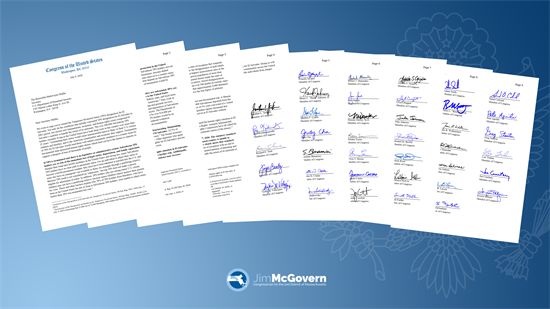
WASHINGTON—80 Members of Congress, led by Congressman James P. McGovern (D-MA), Ranking Member of the House Rules Committee and Co-Chair of the Tom Lantos Human Rights Commission, sent a letter yesterday afternoon urging U.S. Department of Homeland Security Secretary Markwayne Mullin to extend the Temporary Protected Status designation for El Salvador, which is currently set to expire on September 9, 2026. “Not only do the conditions that initially warranted TPS designation for El Salvador in 2001 persist, but serious new humanitarian, economic, and human rights crises compound El Salvador’s inability to handle the return of its nationals,” write the lawmakers in their letter. “The over 200,000 Salvadoran TPS holders currently living in the United States have built deep roots in this country over more than 25 years. Terminating their status would cause immeasurable harm to them, to their U.S.-citizen children and families, and to the American communities and economy they support.” Salvadoran TPS holders make substantial contributions to the American economy. Nine out of ten Salvadoran TPS holders participate in the U.S. workforce, contributing $5.4 billion to the economy and paying $1.5 billion in federal, state, and local taxes annually. They work in industries facing chronic labor shortages, including construction, transportation, manufacturing, food service, and building and grounds maintenance. Many have lived here lawfully for more than 25 years, building businesses, working in critical industries, paying taxes, and raising families. More than 150,000 children, all U.S. citizens, have a Salvadoran TPS-holder parent in the American workforce. Despite decades of lawful residence and deep ties to the United States, many TPS holders have no available pathway to permanent status under current immigration law. Approximately 20% of Salvadoran TPS holders arrived in the United States at age 16 or younger. Forcing them to leave would mean removal to a country where they have few ties and would be at risk of violence. The new letter also details the grave human rights conditions Salvadoran TPS holders could face if deported. Human rights organizations in El Salvador have documented mass arbitrary detentions, forced disappearances, mass trials, the detention of more than 3,000 children, and more than 500 deaths in custody since 2022. Independent reports have also found that migrants deported to El Salvador are commonly incarcerated upon arrival without judicial review or due process. Under federal law, TPS must be extended when conditions prevent a designated country from adequately handling the return of its nationals. “Ongoing state-sponsored human rights violations, a state of exception with no end in sight, economic fragility, collapsed public services, and documented patterns of detaining and disappearing deportees all confirm that El Salvador cannot handle the return of its nationals at this time,” write the lawmakers. The statutory standard for TPS stipulates that TPS must be extended if the designated country is unable to adequately handle the return of its nationals. “El Salvador clearly meets that standard today,” conclude the lawmakers. The letter is endorsed by the National TPS Alliance, American Business Immigration Coalition, Allianza Americas, National Day Laborer Organizing Network, International Union of Painters and Allied Trades, Service Employees International Union (SEIU), CASA, CARCEN-LA, FWD.us, and the National Domestic Workers Alliance. The full text of the letter is available here.
McGovern has championed Temporary Protected Status since helping to create the program as a congressional staffer more than three decades ago. Throughout his career, he has been a global voice for human rights, using his position as Co-Chair of the bipartisan Tom Lantos Human Rights Commission to defend political prisoners, protect vulnerable communities, and hold governments accountable for human rights abuses around the world. |


Press Releases

Constituent Services
Read More
How can I help?
From getting answers from government agencies to cutting through red tape to get you results, my office is here to help.